
Introduction
If your water heater is aging — or you’re building a new home and planning ahead — you’ve likely encountered the central question: should you go tankless or stick with a traditional storage tank unit?
Both options have their place, but the right choice depends on your household size, hot water usage habits, budget, and long-term goals. In this guide, our licensed tankless water heater specialists break down everything you need to know to make a confident, informed decision.
What Is a Tankless Water Heater?
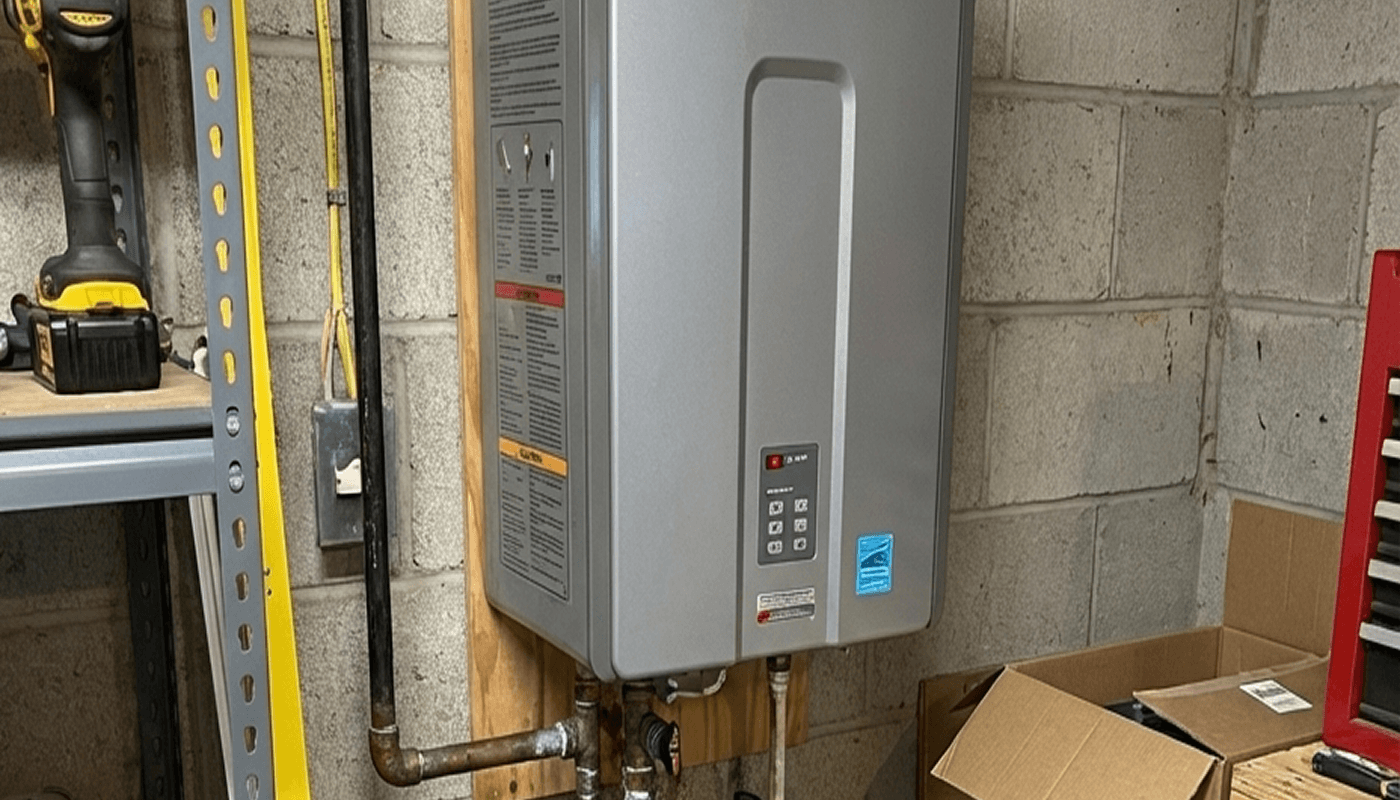
A tankless water heater (also called an on-demand or instantaneous water heater) heats water directly as it flows through the unit — without storing it in a tank. When you turn on a hot water tap, cold water travels through a pipe into the unit, where it’s heated by either a gas burner or an electric element. You get hot water almost instantly — and the heating process stops the moment you turn off the tap.
What Is a Traditional (Tank) Water Heater?
A traditional storage tank water heater maintains a reservoir of heated water — typically 30 to 80 gallons — ready for use at any time. The tank continuously heats the water to maintain a set temperature, even when you’re not using it. When hot water is drawn from the top of the tank, cold water enters from the bottom and the heating cycle begins again.
Key Differences: Tankless vs. Traditional
1. Energy Efficiency
Traditional tank heaters experience what’s known as “standby heat loss” — they expend energy keeping water hot even when no one needs it. This runs up your utility bills 24 hours a day.
Tankless water heaters, by contrast, only activate when hot water is demanded. According to the U.S. Department of Energy, tankless units can be 24–34% more energy-efficient than storage tank models for homes that use 41 gallons or less of hot water per day. For higher-usage households, the efficiency advantage is still significant.
Winner: Tankless
2. Lifespan
Traditional tank water heaters typically last 8–12 years before requiring replacement. Mineral buildup, tank corrosion, and constant thermal cycling take their toll over time.
Tankless water heaters, when properly maintained, can last 20 years or more — often twice as long. Most tankless units also feature easily replaceable parts, extending their serviceable life further.
Winner: Tankless
3. Upfront Cost
Traditional tank heaters are less expensive upfront — typically ranging from $300–$800 for the unit, plus installation. This makes them attractive for budget-conscious homeowners dealing with an immediate replacement need.
Tankless water heaters have a higher initial investment — usually $800–$1,500+ for the unit, plus the cost of professional installation (which may involve gas line upgrades or electrical panel changes).
Winner: Traditional (short-term)
4. Hot Water Supply
Traditional tanks can run out of hot water if demand exceeds the tank capacity — a common complaint in larger households or during peak usage hours (morning showers, laundry, dishwashing simultaneously).
Tankless systems provide a continuous, theoretically unlimited supply of hot water — as long as demand doesn’t exceed the unit’s flow rate. For larger households, multiple units or a high-capacity model may be required.
Winner: Tankless (with proper sizing)
5. Space Requirements
Traditional tank units are bulky — a 50-gallon tank takes up significant floor space in your utility room, garage, or closet.
Tankless water heaters are compact and wall-mounted, freeing up considerable space. Some models are even designed for outdoor installation.
Winner: Tankless
6. Maintenance
Both systems require periodic maintenance. Traditional tanks need annual flushing to remove sediment. Tankless units need descaling (especially in hard water areas) and annual inspection to maintain peak performance and warranty validity.
Winner: Tie
Which Is Right for Your Home?
Choose a tankless water heater if you:
- Want long-term energy savings and a lower environmental footprint
- Have a smaller home or limited space
- Plan to stay in your home for 10+ years (maximizing ROI)
- Are building new construction and can plan infrastructure accordingly
- Want a premium, modern system with a longer lifespan
Consider a traditional tank heater if you:
- Need an immediate, budget-friendly replacement
- Are in a short-term living situation or preparing a home for sale
- Have consistent, predictable hot water usage
Ready to Make the Switch?
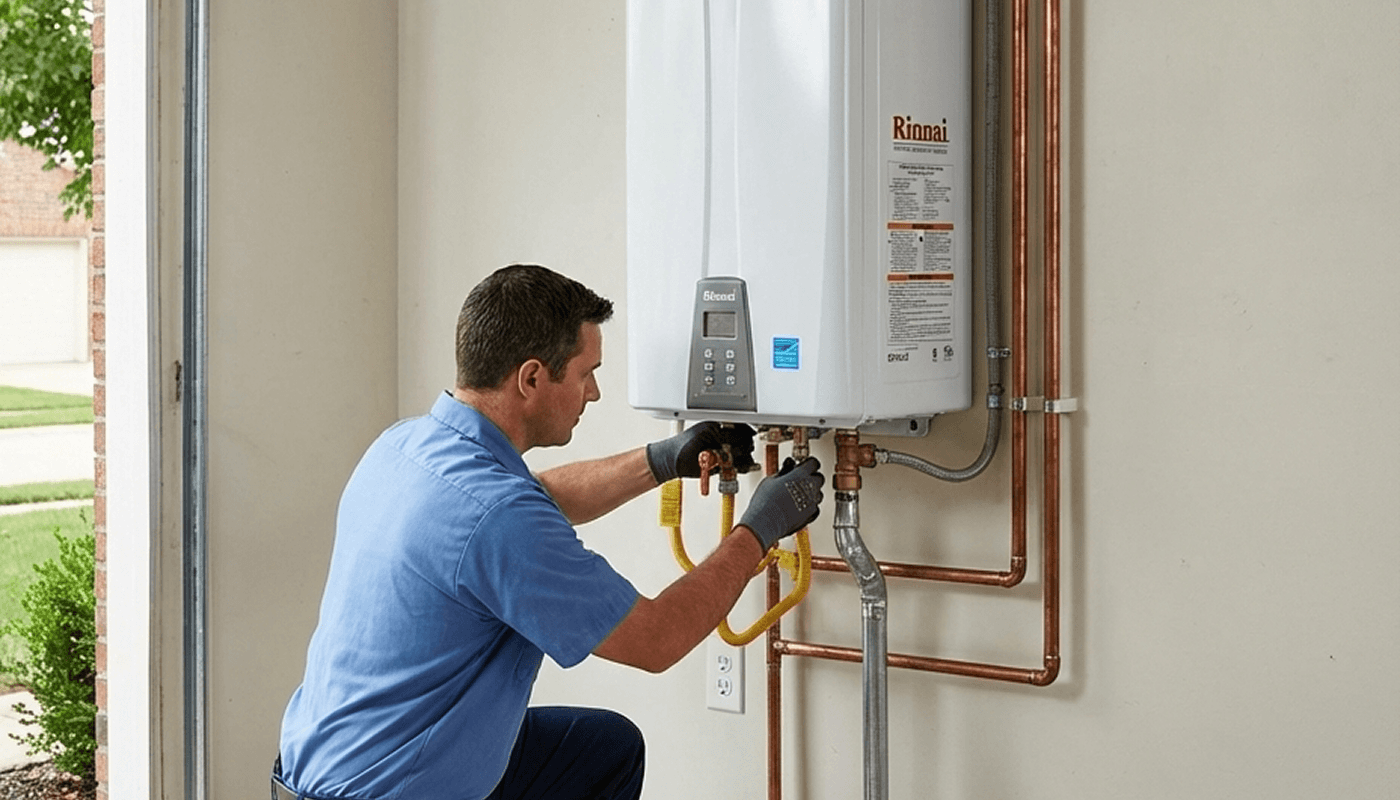
If you’re considering upgrading to a tankless water heater — or need expert advice on what’s right for your home — our licensed technicians are here to help. We provide free consultations, honest recommendations, and professional tankless water heater installation with upfront pricing.
Call 1-800-905-7115 or book an appointment online today. We’re available 24/7 for your convenience.